Aenean ultrices nunc a congue tincidunt. Ut iaculis nec leo quis sagittis. Donec venenatis ex turpis, id tempus turpis congue et.
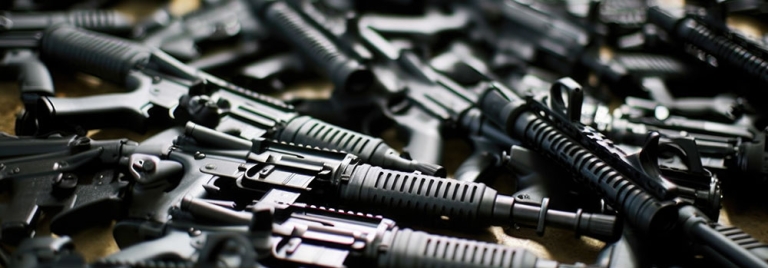
Weapons Trafficking Charges in Toronto and Ontario
This is legal information, not legal advice. It does not create a lawyer-client relationship. For advice about your situation, contact us for a consultation.
Weapons trafficking under section 99 of the Criminal Code is broader than the word trafficking suggests. It covers manufacturing and transferring a firearm, prohibited device, or ammunition knowing the transfer is unauthorized, and "transfer" includes selling, providing, giving, lending, sending, and delivering. A one-time hand-off can be charged the same way as commercial gunrunning. Related provisions criminalize possessing weapons for the purpose of transferring them (section 100) and importing or exporting them knowing it is unauthorized (section 103), the smuggling counterpart. These are among the most seriously treated charges in Ontario courts.
What is weapons trafficking under Canadian law?
For a transfer charge, the Crown must prove beyond a reasonable doubt:
- A transfer or manufacture: the movement of the weapon from the accused to another person, in any of the forms the definition captures, or its making.
- The object: a firearm, a prohibited or restricted weapon, a prohibited device, or ammunition, proven through seizure and expert examination, or through communications and other circumstantial evidence where no weapon is recovered.
- Knowledge that the transfer was unauthorized: the accused knew the recipient or the transaction was not authorized under the Firearms Act and related law.
Straw purchasing, buying firearms legally in order to pass them to unauthorized people, is prosecuted under these sections, and so is supplying a firearm to a friend or family member who has no licence. Investigations are typically built on surveillance, intercepted communications, tracing of recovered guns, and cooperating witnesses, which shapes where the defence issues lie. Possession allegations without a transfer element are dealt with on our firearm possession page.
Penalties for weapons trafficking in Ontario
Where the object is a firearm, a prohibited device, or ammunition, weapons trafficking and smuggling are indictable offences with a maximum of 14 years in prison, raised from 10 years by Parliament's 2023 firearms amendments, and a mandatory minimum of 3 years for a first offence and 5 years for a second or subsequent offence. For other weapons, the maximum is 10 years, and the former 1-year minimum for that lower tier was repealed in 2022. Sentences in Ontario for trafficking in handguns run well above the minimums, with the number and type of firearms, the duration of the conduct, and the accused's role driving the result.
Bail is reverse onus on weapons trafficking and smuggling allegations, meaning the accused must show why release is justified, and the strength of the plan matters more here than almost anywhere; our bail hearings page explains the framework. A conviction brings a mandatory weapons prohibition, and immigration consequences for non-citizens at this level of allegation are severe.
Possible defences to a weapons trafficking charge
- Knowledge: whether the accused knew the transfer was unauthorized, the element that separates criminal transfers from lawful ones between licensed people.
- Whether a transfer occurred: attribution in cases built on communications, and the gap between discussing a transaction and completing one.
- Identity and attribution: proving who used the phones and accounts the Crown relies on, and who handled the firearms, especially in multi-party investigations.
- Charter challenges: wiretap authorizations, tracking and production orders, and search warrants can each be attacked, and Part VI intercept litigation is often the heart of the defence.
- Disclosure: these prosecutions generate enormous investigative records, and gaps in disclosure of source handling and surveillance are litigated.
- Entrapment, in the rare case where police provided the opportunity without the required grounds.
Frequently asked questions
Is lending or giving a gun to someone a trafficking offence?
It can be. Transfer includes lending, giving, and delivering, and doing so knowing the recipient is unauthorized falls squarely within the offence. Commercial sale is not required.
What is straw purchasing?
Buying firearms through a licensed person for delivery to someone who cannot lawfully have them. It is prosecuted as weapons trafficking, and the minimum sentences apply where firearms are involved.
What are the minimum and maximum sentences?
For firearms, prohibited devices, and ammunition, the maximum is 14 years, with a minimum of 3 years for a first offence and 5 for a repeat. For other weapons the maximum is 10 years with no minimum.
Did the maximum penalty change recently?
Yes. Parliament raised the maximum for firearms trafficking and smuggling from 10 to 14 years in 2023 as part of its firearms legislation.
Will I get bail on a weapons trafficking charge?
Bail is available but the onus is reversed onto the accused. Strong sureties, a concrete supervision plan, and answers to the specific concerns in the allegations are what carry these hearings.
No gun was ever recovered. Can I still be convicted?
The Crown can attempt to prove the object and the transfer through communications, surveillance, and witnesses, but the absence of a recovered firearm creates real proof problems that the defence presses on every element.
Charged with weapons trafficking? Contact us
This is legal information, not legal advice. It does not create a lawyer-client relationship. For advice about your situation, contact us for a consultation.
Sewrattan Criminal Lawyers defends weapons trafficking and firearms prosecutions across Toronto and Ontario. Contact us for a consultation: 416-583-1510 ext. 2. Related pages: Firearm Possession and Bail Hearings.

Carry Concealed Weapons Charges in Toronto and Ontario
This is legal information, not legal advice. It does not create a lawyer-client relationship. For advice about your situation, contact us for a consultation.
Carrying a concealed weapon is an offence under section 90 of the Criminal Code: carrying a weapon, a prohibited device, or prohibited ammunition concealed, without an authorization under the Firearms Act. The charge usually arises from a street stop or a search incident to arrest, when something is found in a pocket, waistband, or bag. Its elements are narrower than the fact pattern suggests. The object must actually be a weapon in law, the concealment must be intentional, and the search that found it must survive Charter scrutiny.
What is carrying a concealed weapon under Canadian law?
The Crown must prove beyond a reasonable doubt:
- The object was a weapon, a prohibited device, or prohibited ammunition. Under section 2 of the Criminal Code, a weapon is anything used, designed to be used, or intended for use in causing death or injury or in threatening or intimidating. For inherently dangerous or prohibited items, such as a firearm or brass knuckles, this element is straightforward. For ordinary objects, it is not: a folded pocketknife or multi-tool in a pocket is not a weapon unless the Crown proves it was intended for use as one. An ordinary tool carried in an ordinary way is not this offence.
- The accused carried it: on the person or close at hand, such as in a bag being carried.
- It was concealed, and concealed intentionally: hidden from observation in circumstances showing a purpose to keep it from being seen, not merely an item that happened to be out of sight in a pocket.
- No authorization under the Firearms Act applied. Authorizations to carry concealed are essentially unavailable to ordinary members of the public in Canada, so the element is rarely contested, but it completes the offence.
Concealed carry counts are often laid alongside the offences on our weapons possession page, and where the object is a firearm, alongside the more serious charges on our firearm possession page, which usually dominate the prosecution.
Penalties for carrying a concealed weapon in Ontario
Carrying a concealed weapon is a hybrid offence with a maximum penalty of 5 years in prison if the Crown proceeds by indictment, or 2 years less a day on summary conviction. There is no mandatory minimum. On its own, a first-time concealed carry allegation involving a knife or similar object commonly resolves in Ontario without jail, and often without a conviction, through diversion, a peace bond, or a discharge, depending on the circumstances. Where the concealed item is a loaded firearm, the section 90 count is the least of the accused's concerns, and the sentencing picture is driven by the firearm offences. A conviction can bring a weapons prohibition and, for non-citizens, immigration consequences.
Possible defences to a concealed weapon charge
- Not a weapon: the central defence for everyday objects. Tools, work knives, and utility items carried in the ordinary way lack the weapon character the offence requires, and the Crown must prove intended use as a weapon.
- No intentional concealment: items ordinarily carried in pockets and bags are not "concealed" merely because they were not visible; the Crown must prove a purpose of concealment.
- Knowledge: awareness that the item was there at all, in borrowed jackets, bags, and vehicles.
- Charter challenges: these cases begin with police stops, investigative detentions, and pat-down searches, and the limits on those powers are strict. An unlawful detention or search leads to an application to exclude the weapon, which usually ends the case.
- Classification disputes where a prohibited device is alleged.
Frequently asked questions
Is a pocketknife in my pocket a concealed weapon?
Not by itself. An ordinary folding knife carried as a tool is not a weapon in law, and being in a pocket is not automatically concealment. The offence requires proof the item was a weapon and was deliberately hidden.
What does concealed mean?
Hidden from observation with the intention that it not be seen. The Crown must prove the purpose of concealment, not just that the object was out of sight.
What is the penalty for carrying a concealed weapon?
Up to 5 years by indictment or 2 years less a day on summary conviction, with no minimum. Stand-alone first-time cases involving non-firearms often resolve without jail or without a conviction.
Can I carry something concealed for self-defence?
No authorization exists for ordinary members of the public to carry concealed weapons in Canada, and intending an object for use against people is what makes it a weapon. A self-protection purpose does not legalize concealed carry.
The police found it during a pat-down. Was that legal?
It depends. Police powers to detain and to conduct protective searches are real but limited, and whether the stop and search were lawful is often the decisive issue. Unlawful searches lead to exclusion of the evidence.
Will this charge give me a criminal record?
Only a conviction creates a record, and many first-time concealed weapon matters resolve through diversion, peace bonds, or discharges. The right path depends on the object, the context, and the strength of the Crown's case.
Charged with carrying a concealed weapon? Contact us
This is legal information, not legal advice. It does not create a lawyer-client relationship. For advice about your situation, contact us for a consultation.
Sewrattan Criminal Lawyers defends weapons charges across Toronto and Ontario. Contact us for a consultation: 416-583-1510 ext. 2. Related pages: Weapons Possession and Firearm Possession.

Weapons Possession Charges in Toronto and Ontario
This is legal information, not legal advice. It does not create a lawyer-client relationship. For advice about your situation, contact us for a consultation.
Weapons possession charges cover everything that is not a firearm case: knives, prohibited weapons like brass knuckles and pepper spray, and everyday objects alleged to have been carried as weapons. Two provisions do most of the work. Section 88 of the Criminal Code makes it an offence to possess a weapon for a purpose dangerous to the public peace, and sections 91 and 92 criminalize possession of prohibited weapons and devices. The recurring question in these cases is definitional: whether the object was a weapon in law at all, which turns on design and on what the possessor intended.
What is weapons possession under Canadian law?
Section 2 of the Criminal Code defines a weapon as anything used, designed to be used, or intended for use in causing death or injury, or in threatening or intimidating a person. That definition sweeps in ordinary objects only when purpose supplies the weapon character: a hammer is a tool in a toolbox and can be a weapon in a raised fist. The main charges are:
- Possession of a weapon for a dangerous purpose (section 88): possession of a weapon, or an imitation, for a purpose dangerous to the public peace or for committing an offence. The Crown must prove the dangerous purpose, judged on all the circumstances at the time of possession. Carrying something "for protection" is not automatically innocent and not automatically guilty; as the Supreme Court's decision in R v Kerr illustrates, the purpose is assessed on the facts, including the reality of any threat.
- Possession of a prohibited weapon or device (sections 91 and 92): items prohibited by regulation regardless of purpose, including brass knuckles, automatic and centrifugal opening knives, and spray designed for use against people. Section 92 adds the element of knowing the possession is unauthorized.
Firearm-specific allegations are addressed on our firearm possession page, and hidden carrying on our carry concealed weapons page.
Penalties for weapons possession in Ontario
Possession of a weapon for a dangerous purpose is a hybrid offence with a maximum of 10 years in prison by indictment or 2 years less a day on summary conviction. Possession of a prohibited weapon carries a maximum of 5 years under section 91 and 10 years under section 92. There are no mandatory minimums for these offences.
Outcomes in Ontario track the object and the context. A first-time prohibited weapon count over an item bought online often resolves without a conviction; a knife produced during a confrontation is treated far more seriously, and where a weapon count accompanies violence charges, it is sentenced as part of that package. A conviction can bring a discretionary weapons prohibition, and one is mandatory for certain indictable weapons offences. Immigration consequences for non-citizens follow the usual rules for criminality.
Possible defences to a weapons possession charge
- Not a weapon: the object was a tool, sporting equipment, or utility item without the design or intended use the definition requires. For ordinary objects, the Crown must prove weapon purpose.
- No dangerous purpose: possession for work, camping, collection, or another innocent purpose, judged on the circumstances rather than assumptions.
- Classification disputes: whether the item actually falls within a prohibited category, sometimes requiring examination and expert evidence, especially for knives alleged to open by centrifugal force.
- Knowledge: awareness of the item's presence, and for section 92, knowledge that possession was unauthorized.
- Possession: control and attribution in shared homes, bags, and vehicles.
- Charter issues: many weapons charges emerge from street stops and pat-down searches, and unlawful detentions or searches under sections 8 and 9 lead to exclusion applications that decide the case.
Frequently asked questions
Is it illegal to carry a knife in Canada?
Not in itself. There is no blade-length law, and ordinary knives are lawful to own and carry for legitimate purposes. A knife becomes a criminal problem when it is a prohibited design, carried concealed as a weapon, or possessed for a dangerous purpose.
Is pepper spray legal in Ontario?
Spray designed for use against people is a prohibited weapon, and possessing it can be a criminal offence. This surprises many people who bought it for personal safety, and these cases often resolve leniently, but the charge is real.
Can I carry something for self-defence?
Carrying an item as a weapon against people, even defensively, engages the dangerous purpose offence, and there is no self-defence carve-out for possession. The purpose is assessed on all the circumstances, including any genuine, immediate threat.
Are brass knuckles illegal?
Yes. Brass knuckles are a prohibited weapon, and possession is an offence regardless of purpose. The same applies to automatic knives and similar regulated items.
What are the penalties for weapons possession?
Up to 10 years for possession for a dangerous purpose, and up to 5 or 10 years for prohibited weapon possession depending on the section. First-time, low-context cases often resolve without jail or without a conviction.
The item was found in my car during a stop. Does that matter?
It matters twice: the Crown must prove your knowledge and control, and the legality of the stop and search is reviewable under the Charter. Exclusion of the item usually ends the case.
Charged with weapons possession? Contact us
This is legal information, not legal advice. It does not create a lawyer-client relationship. For advice about your situation, contact us for a consultation.
Sewrattan Criminal Lawyers defends weapons charges across Toronto and Ontario. Contact us for a consultation: 416-583-1510 ext. 2. Related pages: Firearm Possession and Carry Concealed Weapons.

Firearm Possession Charges in Toronto and Ontario
This is legal information, not legal advice. It does not create a lawyer-client relationship. For advice about your situation, contact us for a consultation.
Firearm possession offences in the Criminal Code run from licensing lapses to loaded handguns, and the law treats those situations very differently. What the charges share is a common defence architecture: possession must be proven through knowledge and control, the firearm and its status must be proven, and the search that produced the gun is almost always the first battleground. In Toronto, where most firearm cases begin with a vehicle stop or a residential search, the Charter is not a side issue; it is usually the case.
What are the firearm possession offences under Canadian law?
The most commonly charged provisions are:
- Section 91: possessing a firearm without holding a licence, and for restricted or prohibited firearms a registration certificate. This is the charge for expired paperwork and unlicensed inheritance situations, with a maximum of 5 years by indictment.
- Section 92: possession knowing it is unauthorized, the more serious counterpart, with a maximum of 10 years.
- Section 94: being an occupant of a vehicle knowing there is an unauthorized firearm in it, with a maximum of 10 years.
- Section 95: possessing a loaded restricted or prohibited firearm, or one with readily accessible ammunition, without the required authorization, with a maximum of 10 years by indictment. This is the standard loaded handgun charge.
- Section 117.01: possessing a firearm or other weapon while under a court-ordered prohibition, with a maximum of 10 years.
The Crown must prove possession (knowledge plus control, whether personal, constructive, or joint), that the object is a firearm within the Criminal Code definition, usually through an expert operability report, and the absence of authorization. Around the offences sits the regulatory layer of the Firearms Act: licensing, storage and transport rules, and, since October 2022, a national freeze on handgun transfers. Non-firearm weapons are dealt with on our weapons possession page, and transfer allegations on our weapons trafficking page.
Penalties for firearm possession in Ontario
The maximums range from 5 years for unauthorized possession under section 91 to 10 years for the offences described above. There is no longer a mandatory minimum for possession of a loaded restricted firearm: the Supreme Court struck the former minimums down in R v Nur in 2015, and Parliament repealed them, along with other firearm possession minimums, in 2022. That change should not be mistaken for leniency. Ontario courts treat loaded handgun possession as a penitentiary-range offence, and meaningful custody remains the norm on conviction; what the repeal restored is the court's ability to fit the sentence to the person and the circumstances, including through conditional sentences in appropriate cases.
Bail on firearm charges is demanding. For several possession offences, including section 95, the onus is reversed onto the accused, and amendments in force since early 2024 expanded those reverse onus categories. From July 15, 2026, the lookback for prior convictions that trigger the weapons reverse onus doubles from 5 to 10 years. A serious plan with sureties is the price of entry; our bail hearings page explains how those plans are built. A conviction also brings mandatory weapons prohibition orders and, for non-citizens, severe immigration consequences.
Possible defences to a firearm possession charge
- Charter challenges: unlawful vehicle stops, arbitrary detentions, defective search warrants, and overbroad searches under sections 8 and 9. Exclusion of the firearm under section 24(2) usually ends the prosecution.
- Possession: knowledge and control in shared homes, cars with multiple occupants, and borrowed spaces. Proximity to a gun is not possession of it.
- Authorization and status: whether the accused actually held the required licence or authorization, and whether the firearm's classification is what the Crown alleges.
- Operability: whether the object meets the definition of a firearm, tested against the expert report.
- Knowledge of a prohibition order, in section 117.01 cases.
- Continuity of the exhibit from seizure through examination.
Frequently asked questions
My licence expired. Am I facing the same charge as someone with an illegal handgun?
No. Licensing lapses are typically prosecuted under section 91, the least serious possession offence, and are often resolved without jail. Knowingly possessing an unauthorized or loaded restricted firearm is a different tier entirely.
A gun was found in a car I was in. Can I be convicted?
Only if the Crown proves you knew the gun was there and had some control over it, or occupied the vehicle knowing of it. Multi-occupant vehicle cases are contested exactly on knowledge, and they frequently fail on it.
Is there a minimum sentence for possessing a loaded handgun?
No. The former three-year minimum was struck down and later repealed. Sentencing remains serious, and substantial custody is the usual outcome on conviction, but the range is open and depends on the circumstances.
Will I get bail on a firearm charge?
Bail is available but often reverse onus, meaning you must show why release is justified. Strong sureties and a concrete supervision plan are usually decisive.
The police searched my car or home. Can that be challenged?
Frequently, yes. Most firearm prosecutions rise or fall on the legality of the stop, detention, or search, and a successful Charter application excluding the firearm usually ends the case.
What happens to my guns and licence if I am charged?
Bail conditions and weapons prohibitions typically require surrender of firearms and authorizations while the case is ongoing, and a conviction brings a mandatory prohibition order. Return of property depends on the outcome.
Charged with firearm possession? Contact us
This is legal information, not legal advice. It does not create a lawyer-client relationship. For advice about your situation, contact us for a consultation.
Sewrattan Criminal Lawyers defends firearm prosecutions across Toronto and Ontario. Contact us for a consultation: 416-583-1510 ext. 2. Related pages: Weapons Possession, Weapons Trafficking, and Bail Hearings.

Bail Pending Appeal in Ontario
This is legal information, not legal advice. It does not create a lawyer-client relationship. For advice about your situation, contact us for a consultation.
A conviction and sentence do not automatically mean serving the sentence while the appeal is decided. Section 679 of the Criminal Code allows a judge of the appeal court to release a person on bail pending the appeal, and in Ontario these applications are a regular part of appellate practice. The presumption of innocence no longer applies after conviction, so the test is different from ordinary bail: the applicant carries the onus, and the strength of the appeal itself becomes part of the analysis.
What is bail pending appeal under Canadian law?
For an appeal against conviction, the applicant must establish three things:
- The appeal is not frivolous: a low bar, met by grounds that are arguable on the record.
- They will surrender into custody in accordance with the terms of any release order.
- Detention is not necessary in the public interest. This is where most applications are decided. In R v Oland, the Supreme Court explained that the public interest has two components, public safety and public confidence in the administration of justice, and that confidence is assessed by balancing enforceability, the interest in enforcing judgments immediately, against reviewability, the interest in ensuring a person does not serve a sentence for a conviction that may be overturned. The apparent strength of the grounds of appeal matters most for serious offences, where a stronger appeal is needed to tip the balance toward release.
Where the appeal is against sentence only, the test is different: leave to appeal must be granted, and the applicant must show the appeal has sufficient merit that, in the circumstances, detention would cause unnecessary hardship, a standard aimed at the real problem of sentences being fully served before short appeals are heard.
How bail pending appeal works in Ontario
The application is brought to a single judge of the court hearing the appeal, for indictable matters the Court of Appeal for Ontario, supported by a notice of appeal, an affidavit from the applicant addressing the plan of release and the intention to surrender, surety affidavits, and materials showing the grounds of appeal, often including key excerpts of the trial record. The Crown responds, and the application is argued in writing and orally. Where the sentence is short, the application can be prepared and heard quickly, sometimes within days of sentencing, which is often the whole point.
Release orders typically include sureties, residence and reporting conditions, and a term requiring surrender into custody before the appeal is heard or by a fixed date. Breaching the order or failing to surrender ends the release and damages the appeal. A person denied bail pending appeal is not without options: directions can be sought to expedite the appeal, and renewed applications are possible where circumstances change, which parallels the review mechanisms described on our bail detention reviews page.
What strengthens a bail pending appeal application
- Focused, arguable grounds of appeal, identified quickly with the help of trial counsel's file and the key transcripts.
- A concrete plan: sureties, residence, reporting, and any conditions that mirror successful compliance on pre-trial release.
- A record of attending court and complying with prior orders, which speaks directly to surrender.
- For sentence appeals, a realistic showing that the sentence, or the disputed part of it, could expire before the appeal is decided.
- Speed: filing the notice of appeal and moving for release promptly after sentencing.
Frequently asked questions
Can I get bail after being convicted?
Yes. Release pending appeal is available where the appeal is not frivolous, you will surrender into custody, and detention is not necessary in the public interest. The onus is on you, and preparation drives the result.
How fast can a bail pending appeal application be heard?
Quickly, where the materials are ready. In urgent cases, particularly short sentences, applications have been prepared and argued within days of sentencing.
Does the strength of my appeal matter?
Yes, especially for serious offences. The more serious the crime, the more the court weighs the apparent strength of the grounds when balancing immediate enforcement against the risk of a person serving time for a conviction that may not stand.
What conditions come with release pending appeal?
Typically sureties, residence and reporting terms, travel restrictions, and a requirement to surrender into custody before the appeal is heard. The conditions are tailored to the case and the concerns.
What happens if my appeal is dismissed?
You surrender into custody and serve the remainder of the sentence. Time spent in custody before release generally counts toward the sentence; time on bail pending appeal does not.
What if bail pending appeal is denied?
The appeal can be expedited, and a renewed application is possible on a material change. For sentence appeals, the court is alive to the risk of the sentence expiring before the hearing.
Convicted and appealing? Contact us
This is legal information, not legal advice. It does not create a lawyer-client relationship. For advice about your situation, contact us for a consultation.
Sewrattan Criminal Lawyers brings bail pending appeal applications and argues appeals across Ontario. Contact us for a consultation: 416-583-1510 ext. 2. Related pages: Appeals, Bail Hearings, and Bail Detention Reviews.

Bail Detention Reviews in Toronto and Ontario
This is legal information, not legal advice. It does not create a lawyer-client relationship. For advice about your situation, contact us for a consultation.
A denial of bail is not the end of the road. Under section 520 of the Criminal Code, a person detained after a bail hearing can apply to a judge of the Superior Court of Justice to review the detention order, and under section 525 a detained person is entitled to an automatic review after 90 days. Reviews succeed when they are built properly: a transcript that exposes an error, a materially stronger release plan, or both. This page explains how the process works and what actually moves the needle.
What is a bail review under Canadian law?
A bail review is not a simple do-over. In R v St-Cloud, the Supreme Court held that a reviewing judge can intervene in three situations:
- The justice made an error of law at the bail hearing.
- The decision was clearly inappropriate on the record that existed.
- There has been a material change in circumstances, which includes new evidence and, most commonly, a new or significantly strengthened plan of release: additional or better sureties, a residential placement, treatment arrangements, electronic monitoring, or employment.
The review proceeds in the Superior Court on notice to the Crown, on a record that includes the transcript of the original hearing, the exhibits, and affidavit evidence supporting the new plan. Sureties are often called to testify. The same mechanism runs in both directions: under section 521, the Crown can apply to review a release order it says should not have been made, so people who were released can find themselves defending their bail in the Superior Court as well.
How bail reviews work in Ontario
The practical sequence matters. The transcript of the bail hearing must be ordered immediately, because nothing can be filed without it and transcript preparation is often the longest step. While it is being prepared, the new plan is built: sureties are interviewed and their finances documented, residence and supervision arrangements are confirmed, and treatment or programming is arranged where it answers the concern that led to detention. The application record with affidavits is then served and filed, and the review is argued before a Superior Court judge, in Toronto usually within days of the materials being complete.
Separately, section 525 requires an automatic detention review 90 days into pre-trial custody. The Supreme Court held in R v Myers that this hearing is an important safeguard: the judge considers whether continued detention remains justified and whether the case is moving at a reasonable pace, and can give directions to speed the prosecution along. The 90-day review is an opportunity, but it is no substitute for bringing a properly prepared section 520 review as soon as a stronger application can be mounted.
What strengthens a bail review
Reviews are won on preparation, and the most effective improvements are concrete:
- New or additional sureties with real supervisory ability and meaningful pledges, prepared to testify. From July 15, 2026, a person convicted of a serious offence within the past 10 years generally cannot act as a surety, so vet candidates early.
- A residence plan that answers the specific ground of detention, whether that is supervision, distance from a complainant, or structure.
- Treatment, counselling, or programming that addresses the conduct alleged, arranged and confirmed in writing.
- Employment or education commitments that anchor the plan.
- A transcript-based argument identifying legal errors or findings the record did not support.
- Where delay is mounting, evidence about the pace of the prosecution, which matters at the 90-day review in particular.
Frequently asked questions
How soon after being denied bail can I bring a review?
As soon as the materials can be assembled, and the transcript is usually the pacing item. There is no waiting period; the practical timeline is a few weeks in most Toronto cases, driven by transcript preparation and the strength of the new plan.
Do I need new evidence to win a bail review?
Not necessarily. A review can succeed on an error of law or a clearly inappropriate decision alone. In practice, most successful reviews pair the legal argument with a materially stronger plan of release.
What counts as a material change in circumstances?
Anything that meaningfully alters the picture: new sureties, a better residence, treatment arrangements, changes in the Crown's case, or the passage of time and its effect on the strength of the evidence.
What happens at the 90-day review?
A Superior Court judge automatically reviews whether continued detention is justified and whether the case is proceeding at a reasonable pace, and can give directions to move it along. It is a safeguard for everyone in lengthy pre-trial custody.
Can the Crown challenge my release the same way?
Yes. The Crown can apply under section 521 to review a release order, seeking detention or stricter conditions. Those applications are defended on the same record-plus-plan footing.
What are my options if the review is dismissed?
A further review is possible where circumstances change again, and the 90-day review under section 525 remains available. Detention decisions are never permanently frozen; they respond to new facts and new plans.
Detained after a bail hearing? Contact us
This is legal information, not legal advice. It does not create a lawyer-client relationship. For advice about your situation, contact us for a consultation.
Sewrattan Criminal Lawyers conducts bail reviews across Toronto and Ontario. Contact us for a consultation: 416-583-1510 ext. 2. Related pages: Bail Hearings and Bail Pending Appeal Applications.

Bail Hearings in Toronto and Ontario
This is legal information, not legal advice. It does not create a lawyer-client relationship. For advice about your situation, contact us for a consultation.
A bail hearing decides whether a person charged with a crime is released while the case works its way through court, and it is often the most consequential day in the entire prosecution. In Canada, section 11(e) of the Charter guarantees the right not to be denied reasonable bail without just cause, and the law requires release on the least restrictive terms appropriate. In practice, bail in Toronto and across Ontario is won with preparation: a concrete release plan, the right sureties, and an argument organized around the three statutory grounds for detention.
When the bail hearing happens
A person arrested and held for bail must be brought before the court promptly, generally within 24 hours. In Toronto, bail courts sit daily, including weekend and holiday courts, so a hearing can often happen quickly. Whether it should happen immediately is a strategic question: running a bail hearing before the plan is ready can do lasting damage, because losing at the first hearing means the harder route of a bail review. Sometimes the right move is a short adjournment to assemble sureties and a plan.
How bail is decided in Ontario
Under section 515 of the Criminal Code, the court may detain a person on only three grounds:
- Primary ground: whether detention is necessary to ensure attendance in court, which focuses on flight risk and ties to the community.
- Secondary ground: whether detention is necessary for public safety, including any substantial likelihood of reoffending or interfering with witnesses.
- Tertiary ground: whether detention is necessary to maintain confidence in the administration of justice, engaged mainly in the most serious cases.
The Supreme Court has confirmed a ladder principle: release on the least onerous form is the starting point, and each more restrictive form (conditions, sureties, deposits) must be justified before moving up the ladder. From July 15, 2026, that ladder no longer applies where the accused faces a reverse onus, and the codified principle of restraint is directed not to mandate release where detention is justified. Conditions must be tailored and minimal, connected to a real risk in the case, not imposed by habit. In most cases the Crown bears the onus of justifying detention. In some, the onus reverses onto the accused, including murder and other section 469 offences, certain firearms offences, drug trafficking punishable by life imprisonment, and repeat intimate partner violence allegations. Amendments in 2024 expanded these categories, and from July 15, 2026 the list grows again: break and enter of a home, violent or organized crime-related auto theft, extortion involving violence, human trafficking and smuggling, assaults and sexual assaults involving choking or strangulation, and any serious violent charge where the accused has two or more prior convictions for similar offences. The same amendments double the lookback for the weapons reverse onus from 5 to 10 years and require a reverse onus accused to clearly demonstrate that their release plan answers the risks alleged.
What a strong release plan looks like
Bail is granted to a plan, not just a person. A strong plan typically identifies where the accused will live, who will supervise, and how the specific risks the Crown will raise are answered. Sureties are central in Ontario: a surety is an adult, often a family member, who promises the court to supervise the accused and pledges an amount of money. The money is rarely deposited up front; it is a promise that can be enforced if bail is breached. From July 15, 2026, a person convicted of a serious offence within the past 10 years generally cannot act as a surety unless no other suitable person is available. Employment, treatment or counselling where relevant, and workable conditions (curfews, no-contact terms, device or driving restrictions) complete the plan. Preparing sureties to testify is a significant part of the work.
If bail is denied
A denial of bail is not the end. The decision can be challenged by a bail review in the Superior Court of Justice, where errors can be corrected or a material change in circumstances can be shown, and a person detained on a non-murder charge is entitled to have their detention reviewed after 90 days. Those procedures are covered on our bail detention reviews page. Different rules govern release after a conviction, addressed on our bail pending appeal page.
Frequently asked questions
How quickly will the bail hearing happen?
An arrested person must generally be brought to court within 24 hours, and bail courts in Toronto sit every day. The hearing itself happens as soon as the defence is ready to run it well, which is sometimes the same day and sometimes after a short adjournment to build the plan.
Do I need a surety to get bail in Ontario?
Not always. The law requires the least restrictive form of release that answers the risks, and many people are released without a surety. In practice, Ontario bail courts often expect sureties for more serious allegations, and a strong surety materially improves the odds.
How much money does bail cost?
In most Ontario cases, no money is deposited. A surety pledges an amount, commonly in the range of a few thousand dollars and higher for serious charges, which becomes payable only if the bail is breached. Cash deposits are the exception, not the rule.
What happens if bail is denied?
The accused remains in custody, but the decision can be challenged by a bail review in the Superior Court based on legal error or a material change in circumstances, and detention on most charges must be reviewed after 90 days. Preparing a stronger plan is usually the key to the second attempt.
Can bail conditions be changed later?
Yes. Conditions can be varied with the Crown's consent or by application to the court, for example to permit contact, change an address, or adjust a curfew. Until a variation is granted, the existing conditions bind, and breaching them is a separate criminal offence.
Why do I need a lawyer for a bail hearing?
The first bail hearing is usually the best chance at release: the record made there follows the case, and a loss forces a slower review process. Preparation of sureties, the plan, and the legal argument is what wins these hearings.
Facing a bail hearing? Contact us
This is legal information, not legal advice. It does not create a lawyer-client relationship. For advice about your situation, contact us for a consultation.
Sewrattan Criminal Lawyers conducts bail hearings across Toronto and Ontario, often on short notice. Contact us for a consultation: 416-583-1510 ext. 2. Related pages: Bail Detention Reviews and Bail Pending Appeal Applications.

Importing Drugs Charges in Toronto and Ontario
This is legal information, not legal advice. It does not create a lawyer-client relationship. For advice about your situation, contact us for a consultation.
Importing a controlled substance is an offence under section 6(1) of the Controlled Drugs and Substances Act, and for Schedule I drugs it carries a maximum of life imprisonment. Most Toronto-area cases begin at Pearson International Airport or with an intercepted package, and they are prosecuted in Brampton. The decisive issue in the great majority of them is knowledge: the Crown must prove the accused knew they were bringing a controlled substance into Canada, and travellers and receivers who were used as unwitting couriers have a defence the law recognizes.
What is importing under Canadian law?
The Crown must prove beyond a reasonable doubt:
- Importation: bringing a substance into Canada, whether personally, in luggage, by mail or courier, or in commercial goods. The offence is complete when the substance enters the country; it does not require delivery to anyone.
- The substance: a controlled substance under the CDSA schedules, proven by analysis.
- Knowledge: the accused knew the substance was a controlled drug. Actual knowledge is required, though wilful blindness, deliberately avoiding an obvious question about what was being carried, is treated as its equivalent. Suspicion and carelessness are not enough.
Investigations often continue past the border. Where a package is intercepted, police may make a controlled delivery and arrest the person who accepts it, which shifts the case onto possession and knowledge at the moment of receipt, territory covered on our possession for the purpose of trafficking page. Domestic distribution allegations flowing from the same investigation are dealt with on our drug trafficking page.
Penalties for importing drugs in Ontario
For Schedule I substances such as cocaine, fentanyl, heroin, and methamphetamine, importing carries a maximum of life imprisonment. Parliament repealed the mandatory minimum sentences for CDSA offences in 2022, so no minimum applies, but importing remains among the most severely sentenced drug offences in Ontario: for significant quantities of Schedule I drugs, lengthy penitentiary terms are the norm, with the amount, the drug, the offender's role, and the sophistication of the operation driving the number. Genuine duped couriers who are acquitted face no sentence at all, which is why the knowledge fight matters so much.
Bail is contested from a difficult starting point: for CDSA offences punishable by life imprisonment, the onus at the bail hearing is reversed onto the accused. Travel documents, sureties, and a concrete supervision plan are usually central; our bail hearings page explains the framework.
Possible defences to an importing charge
Depending on the evidence, defences may include:
- No knowledge: the blind courier defence. People are recruited through job offers, romance frauds, and favours for acquaintances, and the surrounding circumstances, communications, payment arrangements, and the accused's conduct at the border are examined in detail on this issue.
- No wilful blindness: the Crown must show deliberate ignorance, not just naivety or poor judgment.
- Control and attribution: packages addressed to shared residences, misdelivered parcels, and luggage handled by others.
- Charter issues: border searches operate under a distinct legal framework, but detentions, strip searches, device examinations, statements taken without counsel, and post-border police searches all raise litigable issues that can result in exclusion of evidence.
- Continuity and analysis: the chain from seizure to laboratory, and the certificate of analysis.
- Disclosure of the full investigation, including source and surveillance material, which in international cases is often extensive and contested.
Frequently asked questions
I did not know drugs were in the package or suitcase. Is that a defence?
Yes. Knowledge is an essential element, and unwitting couriers are acquitted. The case then becomes about the believability of that account against the surrounding circumstances, which is why early, careful preparation matters.
What is the penalty for importing cocaine or fentanyl?
The maximum is life imprisonment, with no mandatory minimum since 2022. Significant importations of Schedule I drugs typically attract lengthy penitentiary sentences on conviction, with the quantity and role being the main drivers.
Where will my case be heard?
Cases arising at Pearson International Airport are prosecuted in Brampton, regardless of where the accused lives. Mail and courier cases proceed where the investigation concludes, often where the delivery was made.
Will I get bail on an importing charge?
Bail is available but the onus is reversed for offences punishable by life imprisonment. Release turns on a strong plan, suitable sureties, and addressing any flight concerns, since these cases often involve international ties.
What is a controlled delivery?
An investigative technique where an intercepted shipment is delivered under police surveillance and the recipient is arrested. The Crown still must prove the recipient knew what the package contained.
Can the border search of my phone be challenged?
Border examinations follow their own legal framework, but they are not unlimited, and device searches, detentions, and statements at the border generate real Charter litigation. Whether a challenge is available depends on exactly what happened.
Charged with importing drugs? Contact us
This is legal information, not legal advice. It does not create a lawyer-client relationship. For advice about your situation, contact us for a consultation.
Sewrattan Criminal Lawyers defends importing and other drug prosecutions across Toronto and Ontario, including cases arising at Pearson. Contact us for a consultation: 416-583-1510 ext. 2. Related pages: Drug Trafficking, Possession for the Purpose of Trafficking, and Bail Hearings.

Possession for the Purpose of Trafficking Charges in Toronto and Ontario
This is legal information, not legal advice. It does not create a lawyer-client relationship. For advice about your situation, contact us for a consultation.
Possession for the purpose of trafficking is an offence under section 5(2) of the Controlled Drugs and Substances Act. The Crown does not have to prove a sale ever happened; it has to prove possession of a controlled substance together with an intention to traffic it. That single word, purpose, is what separates this charge from simple possession, and it is where these cases are won and lost, because purpose is almost always proved by inference from circumstances rather than by direct evidence.
What is possession for the purpose of trafficking under Canadian law?
The Crown must prove beyond a reasonable doubt:
- Possession: knowledge and control of the substance, whether personal, constructive, or joint. Everything on our simple possession page about shared spaces and vehicles applies here.
- The substance: identity proven by analysis and certificate.
- The purpose of trafficking: an intention to sell, give, transfer, transport, deliver, or otherwise traffic the drugs. "Traffic" is defined broadly in the CDSA and does not require payment; sharing counts.
Purpose is inferred from the surrounding circumstances: the quantity and its consistency with personal use, packaging into individual units, scales, cutting agents, cash in denominations associated with sales, debt lists, and messages on seized phones. The Crown typically calls a police expert to opine that the circumstances indicate trafficking, and the defence tests that opinion and offers the competing explanation. The completed-sale offence is dealt with on our drug trafficking page; the two charges carry the same penalties.
Penalties for possession for the purpose of trafficking in Ontario
The penalties depend on the schedule of the drug. For Schedule I substances such as cocaine, fentanyl, heroin, and methamphetamine, the maximum penalty is life imprisonment. Parliament repealed the mandatory minimum sentences for these drug offences in 2022 and restored broader availability of conditional sentences, so the full sentencing range is open, but the realities remain serious: penitentiary sentences are the norm for anything beyond the lowest level of street-level activity, and fentanyl cases are treated with particular severity in Ontario.
Bail is harder on this charge than on most. For CDSA offences punishable by life imprisonment, section 515(6) of the Criminal Code reverses the onus, requiring the accused to show why release is justified. A strong, well-prepared plan makes the difference; our bail hearings page explains how those plans are built.
Possible defences to a possession for the purpose charge
Depending on the evidence, defences may include:
- Purpose: establishing that the quantity and circumstances are consistent with personal use, through evidence of the accused's consumption, tolerance, and buying habits, and by cross-examining the Crown expert's assumptions.
- Possession: knowledge and control, particularly in shared residences, stash locations, and vehicles with multiple occupants.
- Charter challenges: these cases are built on searches of homes, cars, and phones, and on warrants whose grounds can be dissected. Exclusion of the drugs or the phone evidence under section 24(2) often determines the outcome.
- Attribution of phone evidence: proving who sent the messages the Crown relies on.
- Continuity and analysis of the substance.
Frequently asked questions
What is the difference between trafficking and possession for the purpose of trafficking?
Trafficking is the completed act of selling, giving, or delivering drugs. Possession for the purpose is holding drugs with the intention to traffic them. They carry the same penalties, and both are far more serious than simple possession.
How much of a drug makes it possession for the purpose?
There is no fixed statutory amount. Purpose is inferred from the whole picture: quantity, packaging, paraphernalia, cash, and messages. Larger quantities can still be personal use, and small quantities packaged for sale can still ground the charge.
The Crown is relying on my text messages. Can that evidence be challenged?
Yes, on two fronts: whether the search of the phone was lawful under the Charter, and whether the Crown can prove who authored the messages. Both are regular battlegrounds.
What are the penalties for possession for the purpose of trafficking?
For Schedule I drugs, up to life imprisonment, with no mandatory minimum since 2022. Actual sentences depend on the drug, the quantity, the role alleged, and the offender's background.
Will I get bail on this charge?
Bail is available, but for offences punishable by life the onus is reversed onto the accused. Preparation, sureties, and a concrete supervision plan are what carry these hearings.
Can the charge be reduced to simple possession?
Where the purpose element is weak, resolutions to simple possession happen, and at trial a court that finds possession but doubts the purpose convicts only of possession. The strength of the purpose evidence drives both paths.
Charged with possession for the purpose of trafficking? Contact us
This is legal information, not legal advice. It does not create a lawyer-client relationship. For advice about your situation, contact us for a consultation.
Sewrattan Criminal Lawyers defends drug prosecutions across Toronto and Ontario. Contact us for a consultation: 416-583-1510 ext. 2. Related pages: Drug Trafficking, Drug Possession, and Bail Hearings.

Drug Trafficking Charges in Toronto and Ontario
This is legal information, not legal advice. It does not create a lawyer-client relationship. For advice about your situation, contact us for a consultation.
Drug trafficking is an offence under section 5(1) of the Controlled Drugs and Substances Act, and for Schedule I substances such as cocaine, fentanyl, heroin, and methamphetamine, it carries a maximum penalty of life imprisonment. Trafficking is defined far more broadly than most people expect: selling is trafficking, but so is giving, transporting, delivering, or even offering to do any of those things. These cases in Toronto and across Ontario are usually won or lost on the police investigation, because most trafficking files begin with a search, a surveillance operation, or an informer.
What is drug trafficking under Canadian law?
Under the Controlled Drugs and Substances Act, "traffic" means to sell, administer, give, transfer, transport, send, or deliver a controlled substance, to sell an authorization to obtain one, or to offer to do any of these things. No money needs to change hands: passing drugs to a friend can be trafficking in law. Section 5(1) prohibits trafficking itself; section 5(2) prohibits possession for the purpose of trafficking, which is how police charge a person found with a quantity of drugs, packaging, scales, cash, or messages suggesting sale rather than personal use.
To convict, the Crown must prove the substance is a controlled substance (through certificates of analysis), that the accused committed an act of trafficking or possessed the substance intending to traffic, and knowledge. Possession requires knowledge and control, and in shared cars and residences that is often the live issue.
Penalties for drug trafficking in Ontario
Penalties depend on the schedule of the substance:
- Schedule I (cocaine, fentanyl, heroin, methamphetamine, and others): maximum of life imprisonment.
- Cannabis outside the legal regime is prosecuted under the Cannabis Act, with its own penalty structure.
Parliament repealed the mandatory minimum sentences for these drug offences in 2022 and restored the availability of conditional sentences (house arrest) in a wider range of cases. Sentencing therefore turns on the substance, the quantity, and the offender's role and circumstances. For hard drugs, and for fentanyl above all, Ontario courts impose severe sentences, with penitentiary terms the norm for anything beyond the lowest level of street trafficking. Bail is also harder: a person charged with trafficking punishable by life imprisonment bears a reverse onus at the bail hearing, meaning the defence must show why release is justified.
Possible defences to a drug trafficking charge
Depending on the evidence, defences may include:
- Charter section 8 challenges to the search: warrantless searches of vehicles and people, the sufficiency of the information used to obtain a search warrant for a residence or phone, and how the search was executed. Excluding the drugs usually ends the prosecution.
- Section 9 challenges to the stop or detention that produced the evidence.
- Possession issues: whether the Crown can prove knowledge and control, particularly in shared vehicles, apartments, and stash locations.
- Purpose: whether the quantity and circumstances actually prove an intent to traffic rather than personal use, an issue often fought through expert evidence.
- Entrapment: where police provided an opportunity to commit an offence without the required reasonable suspicion, including in phone-based, dial-a-dope investigations. A finding of entrapment results in a stay of proceedings.
- Disclosure and delay: gaps in the investigative record, informer-related disclosure litigation, and unreasonable delay under section 11(b) of the Charter and the Jordan framework.
Frequently asked questions
What is the difference between trafficking and possession for the purpose of trafficking?
Trafficking is the act itself: selling, giving, transporting, or offering. Possession for the purpose is having the substance with the intent to traffic it, usually proved through quantity, packaging, cash, scales, and messages. Both are charged under section 5 of the Controlled Drugs and Substances Act and carry the same maximums.
Is sharing drugs with a friend trafficking?
It can be. The legal definition of trafficking includes giving or delivering a controlled substance, with no sale required. Whether such a case is prosecuted, and how it is sentenced, depends on the substance and circumstances.
Will I go to jail for a first trafficking offence?
For Schedule I substances in Ontario, jail is the usual outcome on conviction, and fentanyl cases attract penitentiary sentences. That said, the mandatory minimums were repealed in 2022, conditional sentences are available in some cases, and many prosecutions fail on Charter grounds before sentencing ever happens. Outcomes depend on the evidence.
Can the police search be challenged?
Often, yes. Most trafficking cases begin with a search of a person, vehicle, home, or phone, and section 8 of the Charter requires those searches to be reasonable. Where the search was unlawful, the court can exclude the drugs, which typically collapses the Crown's case.
Can I get bail on a trafficking charge?
Yes, though the starting point is harder: for trafficking punishable by life imprisonment, the accused bears the onus of justifying release. A strong, well-prepared release plan makes a substantial difference at the bail hearing.
What if the drugs were not mine?
Possession requires proof of knowledge and control beyond a reasonable doubt. In shared cars and residences, the Crown's ability to tie the drugs to one particular person is frequently the central weakness in the case.
Charged with drug trafficking? Contact us
This is legal information, not legal advice. It does not create a lawyer-client relationship. For advice about your situation, contact us for a consultation.
Sewrattan Criminal Lawyers defends drug trafficking and related charges across Toronto and Ontario. Contact us for a consultation: 416-583-1510 ext. 2. Related pages: Possession for the Purpose of Trafficking, Drug Possession, and Bail Hearings.

Drug Possession Charges in Toronto and Ontario
This is legal information, not legal advice. It does not create a lawyer-client relationship. For advice about your situation, contact us for a consultation.
Simple drug possession is an offence under section 4(1) of the Controlled Drugs and Substances Act. Two things define how these cases actually unfold in Toronto today. First, possession in law requires knowledge and control, which the Crown must prove and often cannot. Second, federal law and prosecution policy now direct police and Crowns to consider alternatives to prosecution for simple possession, so most first-time possession charges resolve without a criminal conviction. Neither point makes the charge trivial: the path to a good outcome still has to be built.
What is drug possession under Canadian law?
The Crown must prove beyond a reasonable doubt:
- The substance is a controlled substance under the CDSA schedules, proven through analysis and a certificate of analysis or the analyst's evidence.
- Possession: knowledge of the substance and a measure of control over it. Possession can be personal (on the body), constructive (knowledge plus control of drugs kept somewhere else), or joint (shared with others). Mere proximity is not possession: drugs found in a shared apartment, a borrowed car, or a friend's bag are not automatically in everyone's possession.
Cannabis is governed by the Cannabis Act rather than the CDSA, with its own possession limits and offences. Where the Crown alleges the drugs were held for sale rather than use, the charge becomes possession for the purpose of trafficking, a fundamentally different case dealt with alongside drug trafficking.
Penalties for drug possession in Ontario
For Schedule I substances such as cocaine, fentanyl, heroin, and methamphetamine, possession is a hybrid offence with a maximum of 7 years in prison where the Crown proceeds by indictment; summary conviction penalties are modest by comparison. There are no mandatory minimums for possession.
The maximums tell only part of the story. Since 2022, the CDSA has required police and prosecutors to consider warnings, referrals to health and social services, and diversion instead of charges for simple possession, and federal prosecution policy limits possession prosecutions to cases raising public safety concerns. In Toronto, the practical result is that most simple possession matters, particularly for a first-time accused, resolve through diversion, withdrawal, or similar outcomes rather than conviction. Where a case does proceed, discharges and probation remain far more common than jail for possession alone.
Possible defences to a drug possession charge
Depending on the evidence, defences may include:
- No knowledge: drugs in shared spaces, vehicles, borrowed clothing, or luggage the accused did not pack. Knowledge must be proven, not presumed from proximity.
- No control: presence where drugs are found, without more, is not possession.
- Momentary innocent possession: briefly handling drugs to discard or surrender them is not criminal possession.
- Charter challenges: most possession cases begin with a stop, a pat-down, or a search of a car or home. Arbitrary detentions and unreasonable searches under sections 8 and 9 lead to applications to exclude the drugs, which usually ends the case.
- Proof of the substance: continuity from seizure to analysis and the certificate itself can be challenged.
Frequently asked questions
Will a first drug possession charge give me a criminal record?
Usually not, if handled properly. Most first-time simple possession charges in Toronto resolve through diversion or withdrawal, and where a case proceeds, discharges are common. A conviction is the exception rather than the rule for possession alone.
The drugs were not mine. Can I still be convicted?
Only if the Crown proves you knew about them and had some control over them. Drugs found in shared homes, cars, and bags are contested exactly on those elements.
I was a passenger in a car where drugs were found. Am I in possession?
Not automatically. Being present where drugs are located is not possession without proof of your knowledge and control, and passenger cases frequently fail on that gap.
What are the penalties for possession of cocaine or fentanyl?
Up to 7 years where the Crown proceeds by indictment, with no mandatory minimum. In practice, simple possession rarely results in jail, and most first-time matters resolve without a conviction.
What is drug diversion?
Resolution outside the ordinary prosecution track, ranging from withdrawal after counselling or programming to referrals to health services. Federal law now directs police and Crowns to consider these alternatives for simple possession.
Can a possession charge affect travel to the United States?
It can. American border officials apply their own rules, and even records of a charge or admissions about drug use can create issues at the border. Get specific advice before travelling if you have any drug-related history.
Charged with drug possession? Contact us
This is legal information, not legal advice. It does not create a lawyer-client relationship. For advice about your situation, contact us for a consultation.
Sewrattan Criminal Lawyers defends drug charges across Toronto and Ontario. Contact us for a consultation: 416-583-1510 ext. 2. Related pages: Drug Trafficking and Possession for the Purpose of Trafficking.
© 2026 Sewrattan.com | All Rights Reserved.