This is legal information, not legal advice. It does not create a lawyer-client relationship. For advice about your situation, contact us for a consultation.
Weapons possession charges cover everything that is not a firearm case: knives, prohibited weapons like brass knuckles and pepper spray, and everyday objects alleged to have been carried as weapons. Two provisions do most of the work. Section 88 of the Criminal Code makes it an offence to possess a weapon for a purpose dangerous to the public peace, and sections 91 and 92 criminalize possession of prohibited weapons and devices. The recurring question in these cases is definitional: whether the object was a weapon in law at all, which turns on design and on what the possessor intended.
What is weapons possession under Canadian law?
Section 2 of the Criminal Code defines a weapon as anything used, designed to be used, or intended for use in causing death or injury, or in threatening or intimidating a person. That definition sweeps in ordinary objects only when purpose supplies the weapon character: a hammer is a tool in a toolbox and can be a weapon in a raised fist. The main charges are:
- Possession of a weapon for a dangerous purpose (section 88): possession of a weapon, or an imitation, for a purpose dangerous to the public peace or for committing an offence. The Crown must prove the dangerous purpose, judged on all the circumstances at the time of possession. Carrying something "for protection" is not automatically innocent and not automatically guilty; as the Supreme Court's decision in R v Kerr illustrates, the purpose is assessed on the facts, including the reality of any threat.
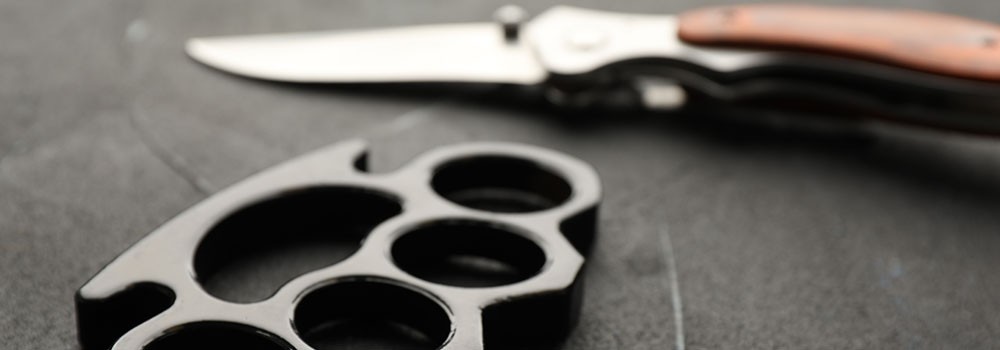
- Possession of a prohibited weapon or device (sections 91 and 92): items prohibited by regulation regardless of purpose, including brass knuckles, automatic and centrifugal opening knives, and spray designed for use against people. Section 92 adds the element of knowing the possession is unauthorized.
Firearm-specific allegations are addressed on our firearm possession page, and hidden carrying on our carry concealed weapons page.
Penalties for weapons possession in Ontario
Possession of a weapon for a dangerous purpose is a hybrid offence with a maximum of 10 years in prison by indictment or 2 years less a day on summary conviction. Possession of a prohibited weapon carries a maximum of 5 years under section 91 and 10 years under section 92. There are no mandatory minimums for these offences.
Outcomes in Ontario track the object and the context. A first-time prohibited weapon count over an item bought online often resolves without a conviction; a knife produced during a confrontation is treated far more seriously, and where a weapon count accompanies violence charges, it is sentenced as part of that package. A conviction can bring a discretionary weapons prohibition, and one is mandatory for certain indictable weapons offences. Immigration consequences for non-citizens follow the usual rules for criminality.
Possible defences to a weapons possession charge
- Not a weapon: the object was a tool, sporting equipment, or utility item without the design or intended use the definition requires. For ordinary objects, the Crown must prove weapon purpose.
- No dangerous purpose: possession for work, camping, collection, or another innocent purpose, judged on the circumstances rather than assumptions.
- Classification disputes: whether the item actually falls within a prohibited category, sometimes requiring examination and expert evidence, especially for knives alleged to open by centrifugal force.
- Knowledge: awareness of the item's presence, and for section 92, knowledge that possession was unauthorized.
- Possession: control and attribution in shared homes, bags, and vehicles.
- Charter issues: many weapons charges emerge from street stops and pat-down searches, and unlawful detentions or searches under sections 8 and 9 lead to exclusion applications that decide the case.
Frequently asked questions
Is it illegal to carry a knife in Canada?
Not in itself. There is no blade-length law, and ordinary knives are lawful to own and carry for legitimate purposes. A knife becomes a criminal problem when it is a prohibited design, carried concealed as a weapon, or possessed for a dangerous purpose.
Is pepper spray legal in Ontario?
Spray designed for use against people is a prohibited weapon, and possessing it can be a criminal offence. This surprises many people who bought it for personal safety, and these cases often resolve leniently, but the charge is real.
Can I carry something for self-defence?
Carrying an item as a weapon against people, even defensively, engages the dangerous purpose offence, and there is no self-defence carve-out for possession. The purpose is assessed on all the circumstances, including any genuine, immediate threat.
Are brass knuckles illegal?
Yes. Brass knuckles are a prohibited weapon, and possession is an offence regardless of purpose. The same applies to automatic knives and similar regulated items.
What are the penalties for weapons possession?
Up to 10 years for possession for a dangerous purpose, and up to 5 or 10 years for prohibited weapon possession depending on the section. First-time, low-context cases often resolve without jail or without a conviction.
The item was found in my car during a stop. Does that matter?
It matters twice: the Crown must prove your knowledge and control, and the legality of the stop and search is reviewable under the Charter. Exclusion of the item usually ends the case.
Charged with weapons possession? Contact us
This is legal information, not legal advice. It does not create a lawyer-client relationship. For advice about your situation, contact us for a consultation.
Sewrattan Criminal Lawyers defends weapons charges across Toronto and Ontario. Contact us for a consultation: 416-583-1510 ext. 2. Related pages: Firearm Possession and Carry Concealed Weapons.